
Quick Answer
An AI recruiting chatbot is conversational software — usually text, SMS, or voice — that handles the repetitive candidate-facing steps: answering questions, screening against knockout criteria, and booking interviews. The evidence for scheduling and responsiveness is strong. The evidence for AI conducting evaluative interviews is much worse: 38% of US job seekers say they've walked away from a hiring process because it included one.
Somebody just pitched you a recruiting chatbot, and the deck had a number in it you can't quite believe. That's a reasonable place to start, because the category is genuinely split down the middle.
Two recent, credible surveys looked at how candidates feel about AI in hiring and came back with what look like opposite answers. One found candidates walking away in droves. The other found 77% of them happy with the experience. Both are right. They measured two different things wearing the same "AI" label.
This piece separates the two, shows what the named-client results actually say once you label them honestly, and gives you a straight checklist for telling the difference before you sign anything.
TL;DR — Key Takeaways
| Use case | Evidence | Candidate reaction |
|---|---|---|
| Answering candidate questions | Strong (vendor + platform data) | Positive |
| Interview scheduling | Strongest — 92% time-to-schedule reduction reported | Positive |
| Knockout screening questions | Good | Neutral, if disclosed |
| First-touch response after applying | Strong | Strongly positive — 32% call it AI's biggest benefit |
| AI conducting evaluative interviews | Mixed | 38% have walked away from a process over it |
| AI scoring or ranking candidates | Documented bias risk | Negative; regulated in several jurisdictions |
What an AI Recruiting Chatbot Actually Does
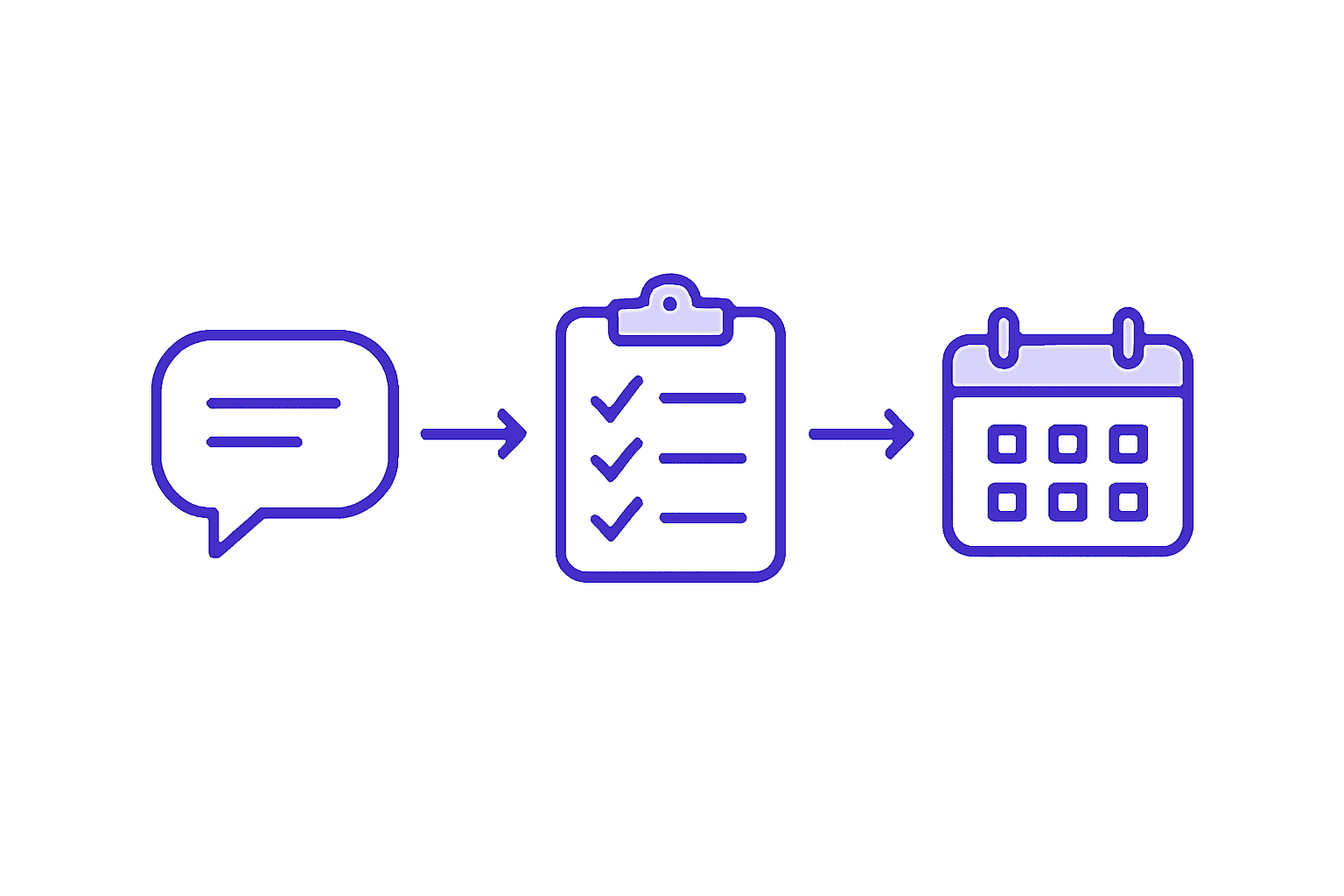
Strip away the vendor language and a recruiting chatbot does three jobs: it answers questions a candidate would otherwise email or call about, it screens against a short list of knockout criteria, and it schedules the interview once both sides are interested. Everything else — voice agents, SMS threads, web widgets — is a delivery channel for one of those three jobs, not a fourth job.
Text, SMS, or voice
Web chat suits your careers page. SMS suits high-volume, hourly-wage roles where candidates are far more likely to read a text than open an email. Voice agents are the newest of the three and the most divisive — Bullhorn's data below rates them surprisingly well, but they also sit closest to the "evaluative interview" line this whole piece is about. The channel matters less than what happens on it.
Chatbot vs. conversational AI vs. agentic AI
A chatbot follows a script with some language-model flexibility bolted on for open-ended replies. Conversational AI is the broader category either sits inside — natural language over text or voice, instead of a form or an IVR tree. Agentic AI goes further: it doesn't just reply, it takes multi-step action on its own — sourcing a shortlist, sending outreach, following up without a human triggering each step. Most of what's sold as a "recruiting chatbot" today is the first category with the second category's marketing.
The Results People Actually Report
Chipotle is the number every vendor deck borrows: time to hire dropped from 12 days to 4 — a 75% cut — after rolling out a conversational hiring platform, with application completion climbing from 50% to 85%. That figure comes from the vendor's case study, and it's worth noting the exact wording Chipotle's own newsroom used when announcing the rollout: the technology was "expected to reduce the amount of time it takes to hire...by as much as 75%." The corroboration is real. The "as much as" is real too.
That's the enterprise, high-volume-hourly end of the category, and it's a useful proof point. But it's not the evidence that matters most if you're running an agency desk. This is:
Ettain Group: 46% response rate in under 10 minutes
A staffing-specific client result, published by the vendor (Sense), no independent methodology disclosed.
HealthCare Support: 40% response rate, 75% reduction in time-to-offer
Same source type. The time-to-offer figure is the one worth sitting with — it's downstream of faster first response, not just a scheduling metric.
Staffmark: 30% faster placements, 1,750 placements influenced
Vendor-published, staffing-specific, and closer to what most agency desks will actually experience than a QSR chain's numbers.
Here's a wider slice of what's been published, sorted by how much you should trust it. This is the part almost no vendor page does: grading its own evidence.
| Organisation | Result | Source type |
|---|---|---|
| Chipotle | Time to hire 12 → 4 days; completion 50% → 85%; +100% applications | Corroborated by client newsroom |
| Workday (as customer) | 12,000 hours saved/yr; time-to-interview ↓60%; time-to-schedule ↓92% | Corroborated by client |
| Paradox platform average | 72% application completion; 3.5-day time-to-hire; 95% satisfaction (2025) | Platform aggregate |
| Ettain Group (staffing) | 46% response rate in under 10 minutes | Vendor-published |
| HealthCare Support (staffing) | 40% response rate; 75% reduction in time-to-offer | Vendor-published |
| Staffmark (staffing) | 30% faster placements; 1,750 placements influenced | Vendor-published |
| Compass Group | 160,000 hires/yr with 20 recruiters | Vendor-published |
| General Motors | $2M saved in year one of interview automation | Vendor-published |
"Vendor-published" means the number comes from the platform selling the tool, with no disclosed independent methodology. That doesn't make it false. It means treat it as a best case, not an average.
The Candidate Side — Where This Goes Wrong
Every stat above is about the employer's side of the screen. Flip it around and the picture changes fast.

The 38% Problem
In Greenhouse's 2026 candidate research, 63% of US job seekers said they'd been interviewed by AI in the past year. 38% had walked away from a hiring process because it included an AI interview, and another 12% said they would. 70% were never told upfront that AI would evaluate them. 51% never heard back afterward.
Greenhouse, 2026 Candidate AI Interview Report, April 2026 — 2,950 candidates across five countries; figures above reported for the US subsample, n≈1,200.
That population detail matters more than it looks. These are US figures, not a global average — worth knowing if you're benchmarking against a different market.
The trust numbers underneath tell the same story from a different angle. A Gartner survey found only 26% of candidates trust AI to evaluate them fairly, and 25% say they trust an employer less once they know AI is doing the evaluating. Back in the Greenhouse data, 46% of candidates want the option to request a human interview, and 39% want a clear explanation of what the AI is actually measuring. Neither ask is unreasonable. Neither is common practice yet.
The Distinction That Decides Everything
Here's the thing almost every AI-and-hiring hot take skips: those two datasets aren't contradicting each other. Greenhouse measured AI conducting evaluative interviews — often undisclosed, often silent afterward. A separate Bullhorn survey measured AI inside recruiter-mediated agency workflows — answering, scheduling, closing the communication gap. They're not the same category wearing different clothes. They're genuinely different jobs, and candidates are telling you, with real consistency, which one they'll accept.
AI that answers
- Answers candidate questions
- Confirms an application was received
- Books and reschedules interviews
- Sends reminders
Candidate reaction: positive
AI that judges
- Scores interview responses
- Ranks candidates against each other
- Conducts evaluative interviews
- Monitors candidates on camera
Candidate reaction: 38% walk away
And Yet
Bullhorn surveyed 2,766 people who'd worked with recruitment firms in the past three years. 77% of those who had an AI interaction reported a positive experience, and 73% rated AI voice agent interviews as equal to or better than human ones. 93% of candidates with a positive AI experience kept working with that recruiter. The difference isn't the technology. It's whether the AI is answering the candidate or judging them.
One honest caveat: these two surveys are roughly a year apart — Bullhorn fielded June–July 2025, Greenhouse published April 2026 — on a variable that's moving fast, so some of the gap is timing. But the use cases are different enough that timing doesn't explain it away.
There's a bridge stat that ties the two together: 32% of candidates in Bullhorn's survey cite "receiving responses to all applications" as AI's single biggest benefit. Candidates aren't anti-AI. They're anti-silence. A chatbot that closes the application black hole is solving the actual problem. A chatbot pretending to be a judge is creating a new one.
Why Speed Matters More Than Almost Anything Else
16% of candidates never got acknowledgment that their application was received. Three-quarters have stopped working with a recruiter because the process took too long or communication was poor. Candidate satisfaction with recruiter speed and responsiveness fell nearly 20% year over year, according to Bullhorn's GRID 2025 Talent Trends Report. That's not an AI problem. It's the problem AI chatbots happen to be well suited to fix.
There's an older, frequently misapplied study behind the "speed to lead" argument, and it deserves its caveats stated plainly rather than smuggled in as a recruiting stat. A Harvard Business Review analysis of 1.25 million sales leads across 42 companies found firms contacting a lead within an hour were nearly 7x more likely to qualify it than those waiting an hour longer, and over 60x more likely than those waiting a full day. That study is from 2011, and it's about sales leads, not recruiting. It's directional, not proof — but it lines up with what Ettain Group reports inside actual recruiting: a 46% response rate in under 10 minutes.
Speed isn't the whole game. But of everything a chatbot can plausibly fix in a recruiting process, it's the one with the least controversial evidence behind it.
The Compliance Layer
This is a short section on purpose — it's genuinely a rabbit hole and this isn't the place to go all the way down it. Two rules come up constantly:
Applies to employers and employment agencies. Requires a bias audit within one year, public posting of the results, and 10 business days' notice before an automated employment decision tool is used. In force since July 5, 2023.
Illinois AI Video Interview Act
Requires pre-interview notice, an explanation of how the AI works, and consent. Requires deletion within 30 days on request. In force since 2020.
57% of candidates in the Greenhouse research think AI-use disclosure should be a legal requirement everywhere. In a growing number of places, it already is.
This isn't legal advice — confirm current requirements for your jurisdiction before deploying anything that scores or ranks candidates.
How to Evaluate a Recruiting Chatbot
Ten questions that separate a chatbot that helps from one that quietly costs you candidates.
- Does it disclose to candidates that AI is involved, before it engages? Ask to see the exact wording.
- Can a candidate request a human at any point?
- What exactly does it decide on its own, and what does it hand to a recruiter?
- If it screens or scores, is there a public bias-audit position? (NYC LL144 requires one.)
- Which channels — web chat, SMS, WhatsApp, voice — and which ones do your candidates actually use?
- Does it write back into your ATS, and at what field level?
- What's the fallback when it doesn't understand?
- What's the pricing model — per seat, per conversation, per candidate?
- Can you see transcripts, and how long are they retained?
- What happens to a candidate who never replies?
Where Chatbots Shouldn't Be Used
Final rejections deserve a human voice, even a form-letter one. Anything that scores or ranks candidates without a human reviewing the result shouldn't ship, regardless of what the vendor calls it. Complex or sensitive candidate situations — a counteroffer, a visa question, a compensation negotiation — are exactly where a script breaks and a recruiter's judgment is the entire product. And client-facing communication is a relationship, not a workflow step; automate that one carefully or not at all.
The AI that answers — built into the ATS, not bolted on
HRmony's Crew agents handle sourcing, outreach, and first-line screening 24/7, disclosed and reviewed by a recruiter before anything moves — because they run inside the same ATS+CRM data layer as every candidate and client record, not as a separate tool guessing from a script. See what's included on the pricing page.
See Crew in Action →Related Reading
FAQ: AI Recruiting Chatbots
What is a recruiting chatbot?+
How do recruiting chatbots work?+
Do candidates like AI chatbots in recruiting?+
What is conversational AI in recruiting?+
Is it legal to use an AI chatbot to screen candidates?+
What's the best AI for recruiting?+
Can a chatbot replace a recruiter?+
Do you have to tell candidates you're using AI?+
Martin Gordon
Co-founder & CEO, HRmony.ai
Martin has 15+ years in recruiting technology and talent operations. He co-founded HRmony.ai to put AI where it actually helps a recruiter's day — answering, sourcing, and following up — never as an unreviewed judge of who advances. About HRmony